Showing posts with label Profil. Show all posts

Friday, October 6, 2023

Converting Liabilities into Assets with Robert Kiyosaki

Converting Liabilities into Assets with Robert Kiyosaki

Although it is sometimes neglected in conventional educational institutions, financial literacy is an essential component of obtaining financial success. We'll examine a key lesson from renowned financial author and educator Robert Kiyosaki in this post as he explains how to turn obligations into assets. With the help of Kiyosaki's insights, people of all ages may raise their financial intelligence and guarantee a better financial future.

Converting Liabilities into Assets with Robert Kiyosaki
Robert Kiyosaki @brimco.io


Understanding the Basics of Financial Literacy

Prior to learning about the idea of turning liabilities into assets, it's crucial to understand the fundamentals of financial literacy. Kiyosaki emphasizes that comprehension of a financial statement is the first step in financial education. Surprisingly, he observes that roughly 95% of college graduates lack this essential understanding.


The Six Fundamental Words in Financial Literacy

Kiyosaki identifies six key words that form the foundation of financial literacy: income, expense, asset, liability, and cash flow. He emphasizes that true financial intelligence and success lie in the ability to control cash flow, making these six words indispensable in the journey towards financial freedom.

  1. Income: The starting point of financial success is your income. It's the money that flows into your life, often as a result of employment or investments.]
  2. Expense: Expenses encompass all the money that flows out of your life to cover various costs, such as bills, taxes, and everyday expenditures.
  3. Asset: Assets are possessions or investments that put money into your pocket. They contribute positively to your financial health.
  4. Liability: Liabilities are financial obligations that take money out of your pocket. They are essentially debts and expenses that reduce your overall wealth.
  5. Cash Flow: Cash flow refers to how money moves in and out of your life. Understanding and controlling this flow is the secret to financial success.


Cash Flow Patterns

Kiyosaki explains that there are distinct cash flow patterns associated with different financial statuses

  1. The Poor: For those who struggle financially, the cash flow pattern typically involves money flowing in and out quickly, with little control over expenses. This can lead to financial instability and difficulties in saving or investing.
  2. The Middle Class: Many middle-class individuals mistakenly believe that purchasing a larger house makes it an asset. However, Kiyosaki highlights that this is often not the case. Middle-class cash flow patterns involve money flowing out through mortgage payments, taxes, and upkeep costs.
  3. The Wealthy: The wealthy focus on assets that generate positive cash flow. They understand that true assets are those that put money into their pockets, rather than take it out. This mindset shift is a key differentiator between the rich and the middle class.


The Role of Housing as an Asset

A common misconception is that owning a house automatically makes it an asset. Kiyosaki challenges this belief. He argues that whether a house is an asset or a liability depends on how it affects your cash flow.

For many individuals, their primary residence serves as a liability because it incurs expenses such as mortgage payments, taxes, and maintenance costs. These costs drain money from their pockets rather than adding to their wealth.

However, Kiyosaki shares his own experience of purchasing an investment property at the age of 25. This property generated rental income, making it an asset that put money into his pocket. The key takeaway is that the definition of an asset or liability is not based on the type of property but on its cash flow.


Human Beings as Assets and Liabilities

Kiyosaki also extends the concept of assets and liabilities to human beings. He explains that individuals can be either assets or liabilities, depending on their financial impact. For instance, children, while precious, are considered liabilities because they require significant financial support.

As individuals age, family members, particularly parents and siblings, may become liabilities if their financial needs become burdensome. Kiyosaki emphasizes the importance of planning for these potential liabilities in your financial journey.


Retirement Accounts: Assets or Liabilities?

Robert Kiyosaki challenges the conventional wisdom surrounding retirement accounts like 401(k)s, IRAs, and pensions. He argues that these accounts are often liabilities because they consistently take money out of your pocket, with no guarantee of sufficient funds during retirement.


Kiyosaki's Financial IQ and the Path to Financial Success

In essence, Kiyosaki's financial IQ is about the ability to control cash flow effectively. He contends that while traditional education is important, it does not adequately prepare individuals for managing their finances and investments.

The key to financial success, according to Kiyosaki, lies in understanding the six fundamental words of financial literacy and making informed decisions regarding income, expenses, assets, and liabilities. By focusing on assets that generate positive cash flow and minimizing liabilities, individuals can pave the way to financial freedom.


Conclusion

The advice of Robert Kiyosaki on turning liabilities into assets is a useful road map for enhancing financial literacy and achieving financial success. People can make wise financial decisions that result in a better financial future by being aware of the basic ideas behind income, expenses, assets, liabilities, and cash flow.

Kiyosaki's lessons provide a helpful manual for people of all ages to take control of their financial futures in a world where traditional education frequently falls short in imparting financial acumen. It all starts with a mental shift and a dedication to learning the foundations of financial literacy.

Read more

Thursday, October 5, 2023

Kathy Wood's Shifting Fortunes: Analyzing the Rise and Fall of ARK Invest

Kathy Wood's Shifting Fortunes: Analyzing the Rise and Fall of ARK Invest

Few individuals have received as much attention in recent years in the world of banking and investments as Cathie Wood, the CEO and founder of ARK Invest. She is a well-known name in the sector thanks to her audacious predictions and original investment approaches. However, recent events have led many investors to doubt ARK Invest's future and the veracity of Wood's projections.

Kathy Wood's Shifting Fortunes: Analyzing the Rise and Fall of ARK Invest
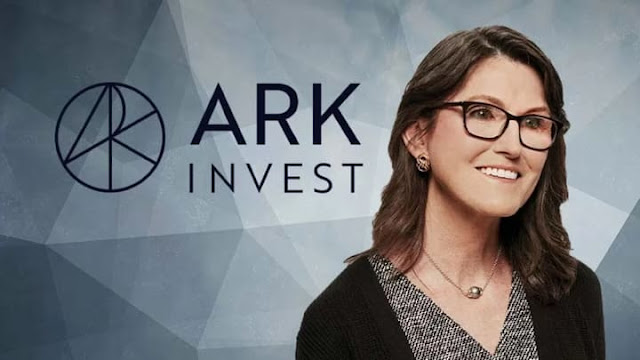
Cathie Wood @bitfinanzas.com


The Early Promise

ARK Invest and Cathie Wood made bold claims of exponential growth when they first appeared on the scene. Wood firmly predicted that ARK Invest portfolios will more than treble over the following five years, which equates to a compound annual rate of return (CAGR) of over 25%, bordering on 30%, in May 2021. She made her forecast in light of her conviction that innovation platforms are gaining unrelenting momentum. At that time, the share price of ARK's primary fund, RK, was roughly $105 per share.

She was so confident in the performance of the fund that she even recommended investors not to sell their ARK funds, stating that they would be making a "terrible mistake" if they did. It appeared as though ARK Invest was on an unstoppable course.


A Downward Spiral

However, as time went on, reality diverged from Wood's expectations. The price of ARK decreased by around 44% over the following year, falling to $59 per share by May 2022. It was clear that the fund was falling short of Wood's ambitious growth goals.

In an interview with CNBC in April 2022, Wood made another audacious prediction. She anticipated that ARK funds will rise at a 50% compound annual growth rate, which would bring RK to $450 per share by April 2027. Given the recent underperformance, the market was dubious, but there was still faith in Wood's ability to manage the ship.


The Most Aggressive Prediction

The most notable forecast was made by Wood in a blog post he wrote in December 2021 titled "Innovation stocks are not in a bubble." She predicted in her essay that over the following five years, ARK's tactics might provide a 30% to 40% compound annual rate of return, effectively doubling to quintupling in value. RK was trading at a price of $97.20 a share at the time.

The price goal Kathy Wood set for her own stock in this prediction was the most aggressive she had ever set for the public. Investors and industry watchers were both intrigued and dubious about it. It was a bold assertion that depended on ARK Invest's distinctive strategy for funding innovation.


The Unforeseen Downgrade

September 2023 came and went, and the story had drastically changed. Wood indicated a big drop in her growth projections for ARK Invest during an appearance on CNBC's Fast Money. She claimed that over the following five years, she now only anticipated a 15% compound annual rate of return. Compared to her earlier forecasts of triple-digit growth rates, this was a sharp departure.

The impact of rising interest rates was the main justification Wood provided for this reduction. Investors were shocked by the radical change in her perspective, which also made them wonder about ARK Invest's risk-taking policies and investment methods.


The Fallout

Investors saw the effects of Wood's updated forecasts very strongly. Many had invested in ARK Invest funds based on her past predictions, but when the fund's performance fell short of their expectations, they suffered significant losses. Over $100,000 in losses were reported by one investor across several ARK ETFs.

Investors were aware of the dangers associated with any investments, thus the abrupt and significant change in ARK's performance prognosis was unexpected. Many questioned if Wood's earlier forecasts were exaggerated, or whether the fund's strategy and risk management need a significant redesign.


Lessons to Learn

Kathy Wood's roller-coaster journey with ARK Invest offers several lessons for investors and fund managers alike:

1. The Importance of Realistic Expectations

Early growth projections made by Wood created irrational expectations that were eventually unattainable. Given that market conditions can change quickly, investors should consider such forecasts with care and skepticism.

2. Acknowledging Risk

A thorough awareness of the risks involved in investing is essential for both fund managers and investors. The significance of risk management is demonstrated by the fact that ARK Invest's models failed to take interest rate sensitivity into account.

3. Transparency and Accountability

Fund managers ought to be open and honest about their plans and any difficulties they could encounter. Questions were raised regarding whether ARK Invest had effectively explained its investment philosophy and risk management techniques in light of Wood's abrupt change in growth predictions.

4. Diversification Matters

Diversifying a portfolio is something investors should think about doing to reduce the risks associated with a concentrated stock. Due to ARK Invest's excessive reliance on a small number of important stocks, including Tesla, investors were subject to high volatility.

5. Long-Term vs. Short-Term

Investors must match their risk tolerance to their investing horizon. Although Wood frequently made long-term projections, investors should make sure they are ok with the possibility of short-term volatility.


The Future of ARK Invest

Future plans for ARK Invest are still up in the air. The huge difference between Kathy Wood's earlier projections and the most recent downgrade has raised doubts about her objectivity. In order to regain the trust of investors, ARK Invest will need to review its investment strategy, increase transparency, and better manage risk.

One thing is clear in the world of finance: markets are unpredictable, and success is not assured. The experiences of Kathy Wood with ARK Invest serve as a sobering lesson in the value of diligence, adaptability, and humility in the field of investing. It would be interesting to see if Wood and ARK Invest can win back investors' confidence and meet their revised growth targets. If the fund can overcome its recent failures and rebuild itself as a dominant force in the field of innovation-focused investing, only time will tell.


Conclusion

Finally, the story of ARK Invest's rise and collapse, as directed by its CEO Cathie Wood, has been a compelling one in the world of finance. Wood made a number of audacious and ambitious statements that first encouraged confidence and drew in a lot of investors, but later growth prospects saw a sharp and unexpected reduction.

Both investors and fund managers need to learn the lessons from this wild ride. When navigating the complex world of investments, it's important to keep realistic expectations, acknowledge risk, be transparent, diversify, and connect the investment horizon with risk tolerance.

The success of ARK Invest currently depends on its capacity to regain investor confidence by a review of its investing strategy, increased transparency, and the adoption of more effective risk management procedures. If ARK Invest can bounce back from recent setbacks and reclaim its position as a dominant force in the innovation-focused investment market, only time will tell.

The ARK Invest story ultimately serves as a compelling reminder that even the most well-known names in finance are susceptible to market changes and that flexibility and humility are still crucial qualities for success in the always changing world of investments.
Read more

Saturday, September 30, 2023

Peter Lynch: The Ultimate Guide to Stock Market Investing for Beginners

Peter Lynch: The Ultimate Guide to Stock Market Investing for Beginners

Are you a beginner intimidated by the world of stock market investing? Don't worry; you're not alone. Many successful investors, like Peter Lynch, started with little knowledge and went on to achieve remarkable financial success. 

In this comprehensive guide, we will explore Peter Lynch's investment philosophy and provide you with actionable tips to kickstart your stock market journey.

Peter Lynch: The Ultimate Guide to Stock Market Investing for Beginners
Peter Lynch, @newtraderu.com


Who is Peter Lynch?

Peter Lynch, the former manager of Fidelity Magellan Fund, is widely regarded as one of the greatest money managers in history. During his 13-year tenure, he achieved a staggering 2,800% gain, consistently outperforming the market. The good news is that you don't need a billion-dollar portfolio to follow his investment principles.

Investing for the Long Term

One of Lynch's key insights is the importance of long-term investing. Stocks have historically outperformed other investments, with an average annual return of about 10% over the past six decades. To maximize your returns, consider investing in tax-deferred accounts like IRAs, 401(k)s, or 403(b) plans, which allow your earnings to compound over time.

The Power of Compounding

Lynch emphasizes the power of compounding, where your earnings generate more earnings. Starting early is crucial. For example, a 20-year-old who invests $200 a month and earns a 10% return can accumulate over $1.1 million by age 60, showcasing the importance of patience and time in investing.

Understanding Your Investment Horizon

Before diving into the stock market, assess your investment horizon. Stocks are best suited for long-term investors who can leave their money in the market for 5, 10, 20, or even 30 years. If you anticipate needing your money soon, it's best to avoid stocks.

Volatility and Patience

Stocks are inherently volatile, and individual stocks can experience significant fluctuations. Lynch advises against investing with a short-term perspective, as it can lead to panic. Successful investors need to weather market ups and downs patiently.

When to Sell a Stock

Lynch's approach to selling stocks is straightforward: focus on the company's performance and growth prospects. If a stock's fundamentals deteriorate or it no longer aligns with your investment thesis, consider selling. Don't adhere to rigid rules like doubling your money or waiting for a 10% decline.

The Importance of Research

Lynch advocates for thorough research. You don't need to be a Wall Street expert to make informed decisions. Start by researching companies you already know and understand. Lynch suggests that amateur investors can effectively follow and invest in five to eight companies they know well.

Stock Categories

Lynch advises categorizing stocks to better understand their behavior. Stocks vary based on size, growth potential, and cyclical nature. Recognize that there's no one-size-fits-all strategy; each category requires a different approach.

Asset Plays and Hidden Values

Lynch identifies opportunities in companies with hidden assets or undervalued components. For instance, a company's brand name or excess cash reserves can significantly impact its value. Investing in such companies can yield substantial returns.

Price-Earnings Ratio (P/E Ratio)

The P/E ratio reflects how many years it will take for a company to earn back your initial investment. Lower P/E ratios are generally preferable, but consider them in the context of the company's growth prospects.

Dividends and Dividend Yield

Dividends are a significant portion of stock market returns. Companies that consistently increase dividends often indicate financial strength. However, be cautious with exceptionally high yields, as they may not be sustainable.

Evaluating Profit Margins

Profit margins reveal how efficiently a company turns revenue into profit. A rising profit margin can indicate cost management and efficiency, making it a valuable metric for assessing companies.

Know Your Edge

Lynch encourages investors to leverage their unique knowledge and experiences. Your everyday life and work can provide insights into industries and companies that you understand better than Wall Street analysts.

Stay Informed and Be Flexible

Lastly, keep up with the latest developments in the companies you invest in. Markets are dynamic, and a company's circumstances can change. Adapt your investment strategy as needed.


In conclusion, Peter Lynch's timeless principles emphasize long-term, research-based investing, and the power of patience and knowledge. With dedication and a commitment to learning, you can build a successful stock market portfolio, even as a beginner. So, start your journey today, and let the world of investing open up exciting opportunities for your financial future.

Read more

Thursday, September 28, 2023

Unlocking Explosive Wealth: Charlie Munger's 3-Step Formula for Success

Unlocking Explosive Wealth: Charlie Munger's 3-Step Formula for Success

Are you sick of hearing the same old financial advice that predicts steady, sluggish growth? Do you envision building a prosperous empire from your modest investments? Look nowhere else! The secrets of investing guru Charlie Munger that can help you generate spectacular profits are revealed in this article. Prepare to accelerate your pursuit of financial success using Munger's three-step process.

Charlie Munger's 3-Step Formula for Success
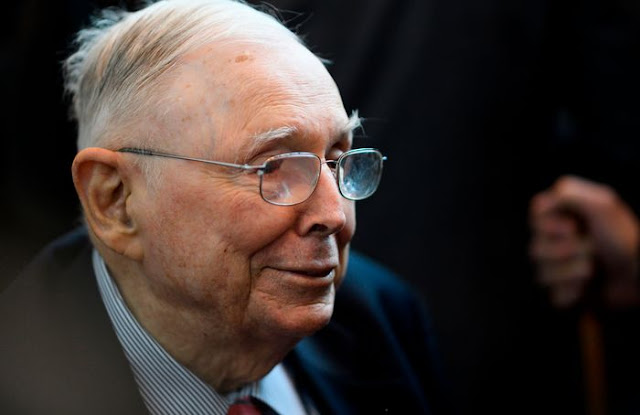
Charlie Munger, @marketwatch.com


Step 1: Exploring Uncharted Territories

Vice Chairman of Berkshire Hathaway Charlie Munger has a distinguished background. He counsels investors to look beyond the crowded markets and explore the uncharted territory of small-cap stocks. Despite Berkshire Hathaway's impressive market cap of close to $800 billion, Munger admits that its enormous scale can make achieving high returns more difficult.

The justification is straightforward: the likelihood of finding hidden gems decreases when you concentrate on big investment opportunities. Large investors, such as Berkshire Hathaway, frequently miss smaller, inefficiently priced stocks because of their focus on larger prospects. This is where you have an advantage.

Finding small-cap stocks that Wall Street ignores has never been simpler thanks to the internet and stock screeners at your disposal. You can find businesses that operate below Wall Street's radar by filtering equities with market capitalization ranging from $10 million to $200 million and P/E ratios between 3 and 15. Your chances of discovering inexpensive stocks increase since these little businesses frequently escape analyst scrutiny.

Step 2: Swing for the Fences

Charlie Munger makes a convincing comparison between investing and baseball, highlighting the value of being patient and taking advantage of opportunities. The top baseball players practice patience by waiting for the ideal pitch to land in their sweet spot before taking a swing. 

Munger uses this idea when making investments. As an investor, you come across a ton of chances every day. You need to be patient and wait for the right opportunity to act if you want to succeed.

Perfect investing chances are hard to come by, which is why you must seize them when they do. Munger's guiding principle is simple: grasp the ideal investment pitch with both hands. Since these chances might not come along often, you must make the most of them when they do.

Step 3: Embrace Concentration Over Diversification

The benefits of diversification are frequently extolled by conventional financial wisdom, which encourages spreading investments over a variety of assets to reduce risk. Charlie Munger, however, questions this philosophy. He argues that investors should take a focused strategy, concentrating on a select group of companies they are completely familiar with.

Munger follows his own advice. Only three assets make up the majority of his family's financial worth: shares of Berkshire Hathaway, Costco, and a fund run by Lee Lu. Munger carefully examines these companies, allowing him to make wise selections, as opposed to diversifying his investments.

Billionaire investor John Ariaga is a fantastic example of the power of concentration. Over a forty-year period, Ariaga concentrated his investments on an area a mile from Stanford University. Ariaga stuck to what he knew best despite multiple investment opportunities outside of this realm, eventually rising to the ranks of the world's wealthiest people.

In Conclusion: Your Path to Explosive Wealth

The three-step formula developed by Charlie Munger shows how to achieve exponential wealth. You can significantly increase your chances of realizing impressive returns on your investments by looking for possibilities in underdeveloped areas, waiting patiently for the right opportunity, and adopting a focused strategy.

So, are you ready to advance your path to financial security? Follow in the footsteps of financial luminaries like John Ariaga and Charlie Munger and be willing to think outside the box. Go against the grain and explore uncharted territory. Your path to exploding fortune starts right now.

Read more

Wednesday, September 27, 2023

Unveiling the Secret to Investing Success in 2024: Guy Spier's Game-Changing Strategies

Unveiling the Secret to Investing Success in 2024: Guy Spier's Game-Changing Strategies

It's critical to keep ahead of the curve in the constantly changing world of finance, particularly in the face of difficult economic circumstances like those anticipated for 2024. Fortunately, we have a renowned investor on our side to help us navigate the turbulent financial landscape. 

In this article, we'll examine the game-changing tactics made public by superinvestor Guy Spier as he offers his advice on navigating the market for the coming year.

Investing Success in 2024 Guy Spier
Guy Spier, @institutionalinvestor.com


The Landscape of 2024: Guy Spier's Perspective

The distinctive economic environment Guy Spier predicts for 2024 must be understood before delving into his investment strategies. The Aquamarine Fund's creator and author of "The Education of a Value Investor," Spier, brings a wealth of knowledge to the table. 

Notably, he helped secure the winning offer for Warren Buffett's charity lunch in 2007, demonstrating his aptitude for investing.
Spier predicts that the year 2024 will bring about some of the most difficult economic situations in recent memory. He recently offered his opinions on how investors can approach this difficult situation in an interview. 

But keep in mind that every investor's investment environment is unique, depending on things like access to other markets, portfolio size, and the amount of information accessible.


The Power of Self-Awareness in Investing

The significance of self-awareness in investing is one of the main lessons. highlights the importance of investors understanding their specific conditions and limits. entails being aware of the trading instruments, having personal experience, and having a sizable portfolio. 

Spier cautions against adopting a "herd mentality" and trying to imitate the strategies of well-known investors like Mike Burry or Bill Ackman. Instead, he advises investors to base their choices on their unique situations and risk tolerance.

The first step to successful investing is to understand your investment environment. He advises investors to determine what is suitable for them, keeping in mind that what is suitable for one person may not be ideal for another. 

Your investment decisions should be influenced by elements such as market access, personal experience, and the availability of particular assets.


Defining Your Circle of Competence

The definition of your "circle of competence" has been emphasized as a key value investment concept. Focusing on investments inside your area of expertise is the idea here. The investing alternatives available to you if you use a U.S. online broker like Charles Schwab are constrained to those provided by that platform. 

As a result, rather than pursuing chances outside of your comfort zone, you should try to become an expert in those particular assets. Spier also suggests minimizing risk by making investments in industries you are knowledgeable about. 

For instance, he mentions his long-held belief in Berkshire Hathaway and his confidence in it. Spier's circle of knowledge surrounds the company, enabling him to invest with confidence, despite other people's doubts about its premium to book value or predictions about its future.


Inflation-Proofing Your Portfolio

Spier presents an insightful viewpoint on how to safeguard your portfolio in light of the rising fear over inflation. He advises concentrating on companies that have a competitive edge or are able to pass price hikes on to customers. 

For instance, the increased consumer spending that results from rising prices benefits credit card businesses like Visa and MasterCard automatically. In times of economic uncertainty, their "inflation-proof" quality makes them appealing investments.

Spier also cites Coca-Cola as an example, which increased prices in reaction to inflation without negatively impacting sales. Investors can lessen the impact of inflation on their portfolios by choosing companies with these qualities.


The Challenge of Rising Interest Rates

Another worry for investors is the potential for higher interest rates. Spier acknowledges that lower valuations for the majority of enterprises can result from rising interest rates. Investors may find this economic reality disconcerting, but he cautions against trying to time the market. 

He advises concentrating on high-quality companies with robust business models as an alternative.
Spier's strategy entails owning companies he believes in and purchasing them at reasonable prices. He tries to stay involved in solid businesses that can withstand the worst and keep expanding over time by resisting the urge to forecast changes in interest rates.


Guy Spier's Barbell Strategy

Guy Spier has a system for investing that he refers to as the "barbell strategy." This tactic is compared to a caveman who must decide between relying on reliable, smaller animals close to the protection of the cave or looking for large, but dangerous prey.

The rear of the cave in his financial portfolio reflects stakes in dependable, strong businesses that can support him even in trying times. These include household names like Nestle, American Express, and Bank of America, according to Spier.

Spier, on the other hand, keeps a look out for chances that have the potential for rapid growth and big profits. These rare but significant opportunities to improve portfolio performance are comparable to the mammoth for a caveman.

Even though Spier's method is effective for him, it's important to keep in mind that each investor's situation is different. What works for one person could not fit with their financial objectives or risk tolerance.


Conclusion: Your Path to Investment Success in 2024

The financial environment is still unreliable and facing issues as we head into 2024. Guy Spier's views offer investors seeking to effectively negotiate this terrain a useful road map. The most important lessons to be learned from Spier's strategy are the value of self-awareness, identifying your circle of competence, guarding your portfolio against inflation, and concentrating on high-quality companies during times of rising interest rates. 

His barbell approach also presents a persuasive viewpoint on how to balance risk and return in your investment portfolio. Although Guy Spier's methods have worked for him, it's important to keep in mind that every person's situation is different. It's critical to adjust your investment strategy in accordance with your unique goals, level of risk tolerance, and financial resources. 

Keep in mind that success in a constantly shifting financial environment depends on your ability to stay knowledgeable and adaptable as you begin your investment adventure in 2024.

Read more

Tuesday, November 1, 2022

Binance CEO: Crypto Is the 'Only Stable Thing' Amid Financial Turmoil

Binance CEO: Crypto Is the 'Only Stable Thing' Amid Financial Turmoil

Binance CEO: Crypto Is the 'Only Stable Thing' Amid Financial Turmoil

In the last few weeks, the price of cryptocurrencies has been violently turbulent, negative sentiments have come from right and left, starting from the boss's tweets to the tightening of regulations by the Chinese government.

But Binance CEO Changpeng “CZ” Zhao said it was impossible for one entity to shut down bitcoin and the underlying blockchain technology, and said state governments and regulators should embrace blockchain technology and cryptocurrencies.

“I don't think anyone can shut (bitcoin) down right now, given that this technology, this concept, is already in the heads of 500 million people,” CZ said in an interview at CoinDesk's Consensus 2021 virtual conference event. "You can't erase that (from the crowd's heads)."

The current war on bitcoin and other crypto assets is akin to refusing to accept the internet business model that e-commerce giant Amazon did when it first started business in the early 1990s, according to CZ.

Cryptocurrencies exist not to kill traditional financial systems or government-backed fiat currencies, but to provide more “money freedom”.

Cryptocurrencies "are just a new tool that can increase the freedom (of) money around the world," Zhao told CoinDesk advisor Nolan Bauerle. "I don't see them competing with regulators... and there are ways we can work together."

CZ's claim comes after Binance, the largest cryptocurrency exchange by volume, faced increased regulatory scrutiny. Bitcoin and other crypto assets are facing regulatory hurdles after their popularity soared this year.

Not only regulators in China and the US; Government entities around the world have raised questions about the business operations of Binance, a company that claims to have no headquarters in any particular country or region.

CZ said the company does not intend to go against any government or country, adding to the doubt that Binance's operations are based on clear regulations.

"We are not against the government," CZ said. "There are times when the regulators or regulations issued are not very clear. This is still being developed in various parts of the world so there is still a gray zone. But [we] have to keep experimenting and working together to get (clear rules)."

Binance's 'Way of the Ninja'

CZ doesn't seem to have a clear strategy for its company, even though Binance is heavily involved in almost every crypto innovation trend, be it decentralized finance (DeFi) or non-fungible tokens (NFT).

"I'm not smart enough to predict what will happen, which will be popular, which users will vote for," said CZ. "The way Binance works is just experiment as much as possible.

CZ said he has been trying to make fewer “top-down” decisions, especially around what he describes as “big projects” like Binance Smart Chain (BSC), a public blockchain technology that is touted as a competitive rival to the Ethereum blockchain.

CZ added that BSC was not his idea and he did not know who it came from.

His clarification appears to be a response to the increasing number of recent hacks or exploits on DeFi protocols built on top of BSC networks, including some of the largest monetary exploits in DeFi history.

With the BSC name directly linked to Binance, many have criticized CZ and held him and Binance responsible for the exploit.

It was previously reported that the decentralized financial platform BurgerSwap lost more than US$ 7.2 million (Rp 104 billion, exchange rate 14,500) of BNB, ETH, BURGER, other tokens due to cyberattacks. Another attack occurred on Pancake Bunny which caused its value to drop by 95% with estimated assets lost reaching US$ 200 million (Rp 2.9 trillion).

“Binance Smart Chain is an independent blockchain, [and] we have no control over it,” said CZ.

However, CZ says that he and his company benefit from BSC's success because Binance coin (BNB) is the native cryptocurrency that supports BSC. Both CZ and Binance remain large holders of BNB.

source: https://www.cnbcindonesia.com/market/20210528170305-17-249127/ceo-binance-sesumbar-tidak-ada-yang-bisa-mematikan-bitcoin-cs

Read more

Thursday, March 31, 2022

NFTs Are Coming Soon to Instagram: Mark Zuckerberg

NFTs Are Coming Soon to Instagram: Mark Zuckerberg

Mark Zuckerberg Says NFTs Are Coming Soon to Instagram

The Meta CEO’s comments at South by Southwest confirmed earlier reports that Instagram was preparing to make such a move.

“We’re working on bringing NFTs to Instagram in the near term," Meta (FB) CEO Mark Zuckerberg said at a panel at Austin’s South by Southwest Festival on Tuesday, according to a tweet from Engadget Senior Editor Karissa Bell. 

Mark Zuckerberg Says NFTs Are Coming Soon to Instagram

Zuckerberg added, however, that “I’m not ready to kind of announce exactly what that’s going to be today.”

  • Casey Newton, writer of The Verge’s Platformer newsletter, tweeted that Zuckerberg also said that “hopefully” in the coming months, Instagram members will be able to mint their own non-fungible tokens (NFT) within the app.
  • In January, the Financial Times reported that Meta was working on plans for both Facebook and Instagram members to be able to display NFTs on their profiles, citing sources familiar with the matter.
  • Meta did not immediately respond to a request for more information on Tuesday.
  • In October Facebook changed its name to Meta to reflect its focus on the metaverse and virtual reality.
  • The company said in a presentation at the time that its metaverse would support NFTs.

DISCLOSURE

The leader in news and information on cryptocurrency, digital assets and the future of money, CoinDesk is a media outlet that strives for the highest journalistic standards and abides by a strict set of editorial policies.

CoinDesk is an independent operating subsidiary of Digital Currency Group, which invests in cryptocurrencies and blockchain startups.

As part of their compensation, certain CoinDesk employees, including editorial employees, may receive exposure to DCG equity in the form of stock appreciation rights, which vest over a multi-year period.

CoinDesk journalists are not allowed to purchase stock outright in DCG.

https://www.coindesk.com/business/2022/03/15/mark-zuckerberg-says-nfts-are-coming-soon-to-instagram

Read more